AI Search
Explore Growth Gary articles about AI search, traditional SEO, AI visibility, GEO, AEO, citations, search tools, and the changing discovery landscape.
Choose the discovery problem you need to solve
- People cannot find an important page: begin with SEO fundamentals and technical accessibility.
- Your brand is missing from AI answers: start with AI visibility explained, then use the small-business checklist.
- Nearby customers struggle to find your business: review Google Business Profile basics and the accuracy of the business information customers see.
- You need evidence before changing anything: follow the AI visibility audit guide rather than judging one generated answer.
Keep SEO, answers and citations in perspective
SEO concerns discovery and understanding in search. AEO and GEO describe overlapping work around direct and generative answers. The labels are useful for discussing the task, but they do not establish three separate checklists that every business must buy.
Google states that its existing SEO fundamentals remain relevant to AI Overviews and AI Mode; there is no special schema or additional optimization requirement for those features. That guidance is specific to Google and should not be treated as a guarantee of inclusion across every AI platform.
Measure a repeatable sample
Choose the customer questions, market and platforms before collecting answers. Keep the wording and conditions comparable, record the date and save the supporting evidence. Distinguish a brand mention from a citation, a recommendation from a passing reference, and all of those from a visit or customer action.
For example, a local business might review a small set of service questions and record whether it appeared, which sources were linked and whether its location was represented accurately. That is a scoped observation—not proof of how every nearby customer sees search results.
Turn findings into a short action list
Check whether the relevant page is accessible, whether the business facts agree, whether the answer is useful and supported, and whether related pages link to it. Prioritize a few observable gaps and retain the baseline so you can recheck after changes.
Avoid creating repetitive location pages, inventing credentials, publishing unsupported claims or buying a “guaranteed citation” promise. More markup or more AI-written articles does not substitute for accurate information and a useful customer experience.
Before your next audit: define the questions, record the platform and date, save examples, separate facts from interpretation and choose one owner for the next check. Use the glossary whenever a report’s terminology is unclear.
First-party reference: Google’s AI features and your website guidance. The articles below provide deeper explanations and current analysis without replacing those platform-specific requirements.
-

How AI Citations Work: From Search Query to Source Link
An AI answer can look deceptively simple. You ask a question. A response appears. A few links sit beside the text, giving the impression that the system read the internet, found the truth, and neatly attached the correct sources. The actual process is more complicated. AI-search platforms may interpret the question, run several searches, retrieve…
-
What Are AI Citations? A Practical Guide for Marketers
For years, earning a search result meant getting your webpage into a ranked list. AI search changes the format. A user can now ask ChatGPT, Perplexity, Claude, or Google an entire question and receive a summarized answer assembled from multiple sources. When the system identifies the webpages supporting that response, it may display links or…
-
Best AI Visibility Tools for 2026
By GrowthGaryUpdated August 12, 2026 The 10 Best AI Visibility Tools for 2026 Marketers spent years getting comfortable with Google rankings. We knew what to measure: keywords, positions, clicks, backlinks, organic traffic. AI search has made that considerably messier. A business can rank well in Google and still be practically invisible when someone asks ChatGPT,…
-
What Is AI Visibility? A Practical Guide to Being Found in AI Search
Learn what AI visibility means, how mentions and citations are measured, and how to improve your brand’s presence in AI-generated answers.
-
Best AI Search Tools for Marketers and Researchers in 2026
AI search tools can compress hours of browsing into one cited answer—but the smoothest summary is not always the most trustworthy. The best choice is the platform that fits your research workflow, surfaces useful evidence and makes important claims easy to verify. This guide compares five leading options for marketers and researchers. If you are…
-
What Are AI Search Tools? A Practical Guide for Marketers
Traditional search gives you a list of links. AI search tools try to give you the answer. Instead of typing a few keywords, opening six tabs, comparing sources, and forgetting which tab contained the useful sentence, you can ask a complete question and receive a summarized response with follow-up options. That can make research faster,…
-

On-Page SEO: The Complete Guide to Optimizing Pages That Rank
Learn how to improve on-page SEO with clearer search intent, titles, headings, internal links, images, structured data, and practical page-level checks.
-
Traditional SEO vs AI Search: What’s the Difference—and Which Matters More?
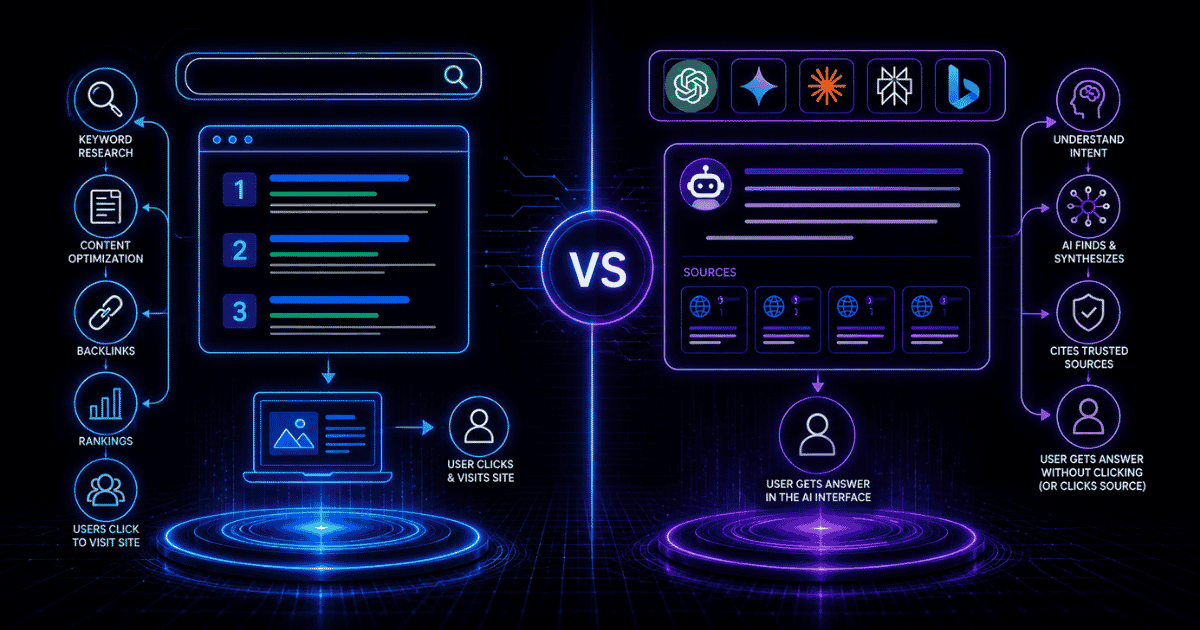
Search used to feel fairly straightforward. Someone typed a query into Google, scanned a list of links, clicked a result, and visited a website. Marketers optimized pages to earn one of those clicks. Now the same person might ask ChatGPT, use Google’s AI Mode, read an AI Overview, continue with follow-up questions, and receive a…
-
What Is Traditional SEO? A Practical Guide for Modern Marketers
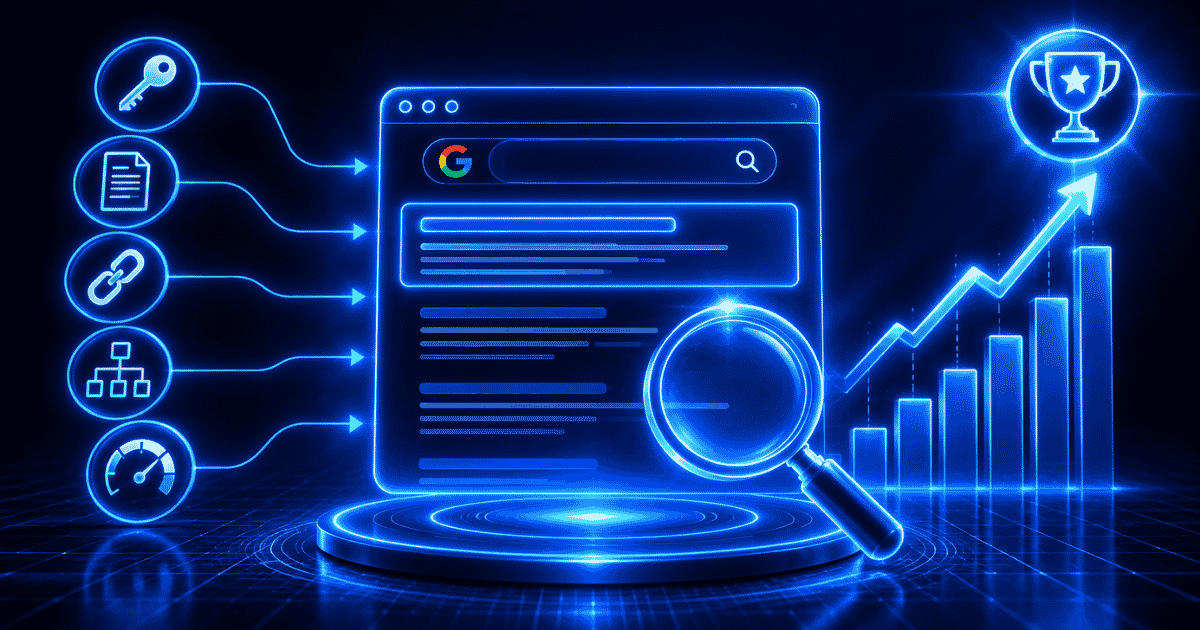
Learn how traditional SEO works across technical, on-page, content, and authority signals—and why those foundations still support AI discovery.